November 2024 Update

Deck the halls! November is flying by, and the holiday season is just around the corner. Let’s take a look back at the month’s highlights and get ready to celebrate.

Sea & Steel Crowdfunding Campaign:

The Sea & Steel game board is shaping up beautifully. We are in the final stages of perfecting the cards, player aid sheets and rulebook.

We’re committed to providing the best possible user experience. Your feedback helped us improve the map by making it larger and rectangular. Thanks!

We’re excited to share the final design of the counters. We hope you like them as much as we do!

Sea & Steel: Columbus’s Voyages is coming to Gamefound! Join our preview campaign now to show your support and be the first to know about our official launch. We’re hard at work finalizing the game and preparing an unforgettable crowdfunding experience. Stay tuned for exciting updates and the official campaign launch date!


Collaborations:

Last call to get your ticket for MdG24 Online Wargames Convention (organized by the Mesa de Guerra team). This is an event tailor-made for all of us, bringing us together from our homes through technology!

We know that in-person conventions have their magic (and we don’t want to change that!), but with MdG24, we’re opening a new door for those who want to enjoy everything wargaming has to offer without leaving their favorite armchair or having those conversations that might not happen at a physical convention because we’re too eager to play.

WHEN?
Thursday, December 12th to Sunday, December 15th, 2024.

WHERE?
Exclusive Discord server for the MdG24 Online Convention.

REGISTRATION
Standard Ticket: €10
Game Designer-Publisher Ticket: €5
Registration link: https://mesadeguerra.com/mdg24-online/

NEVA WARGAMES SCHEDULE:

THURSDAY 12th
1. XMAS PRESENT: We have a top-secret welcome gift for all attendees! Check our official publisher section on the MdG24 Discord server for the big reveal.

SATURDAY 14th
1. (1000-1130 GMT+1) Rebellion & Punishment: War Of The Alpujarras. Demo.
2. (1200-1330 GMT+1) Spartacus: Rome Under Threat. Demo.
3. (1600-1730 GMT+1) Sea & Steel: Columbus’ Voyages. Full 2-player game demo.
4. (1800-1930 GMT+1) Sea & Steel: Columbus’ Voyages. Full 1-player game demo.
5. (2200-0000 GMT+1) Xmas Special: Get ready for our exciting collaboration with other publishers! We’ll be unveiling our 2025 forecast as part of this special program.

SUNDAY 15th
1. (2330-0000 GMT+1) Announcement of the 1st Prototype Contest Winner


INCOMING!

Support the games you’re most excited about by signing up and adding them to your wishlist. The most wishlisted titles will climb the development queue, meaning you have a direct impact on our release schedule!

Note: All images shown for upcoming titles are provisional. Final artwork will be revealed as the games progress to later development stages.

Now, let’s dive into the current status of each project, listed in order of wishlist popularity and development status. Remember, a project won’t be ready for a Gamefound campaign until it reaches 90-100% completion.

Spartacus: Rome Under Threat
Game Overall Status: 80%

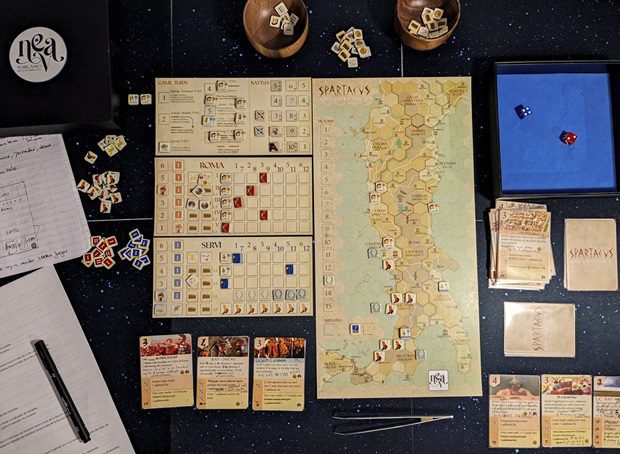
We’re excited to announce that Prototype version 5 is complete! This means the final playtesting wave is imminent. Additionally, our new solitaire mode is in the works and is expected to be finished by December.

Playtesting session with the physical prototype.

Kursk: Rotmistrov’s Offensive
Game Overall Status: 60%

We’ve been busy preparing our first two crowdfunding campaigns, so development on the game has slowed down this month. We’ll be back to full speed soon for the final development phase before release.

Initial setup (12th July 1943 scenario) Prototype version.

Rebellion & Punishment: War Of The Alpujarras
Game Overall Status: 25%

Fran Mariscal has assembled a large group of playtesters. Multiple playtesting sessions are currently underway using the Vassal module. Full steam ahead!

First prototype version

Jarama: The Battle for Madrid
Game Overall Status: 20%

Our game designer has been fine-tuning the game ahead of playtesting. Jesús Pérez will continue working on his game throughout December to begin vassal playtesting soon.

Prototype version.

Peking: 55 Days Of Fury
Game Overall Status: 15%

We’re excited to share more details about this game in the near future. The designer is currently focused on implementing the core gameplay system.

Prototype Version.


Thank you for following our progress in November. Stay tuned for more updates!
Got questions? Leave a comment below!

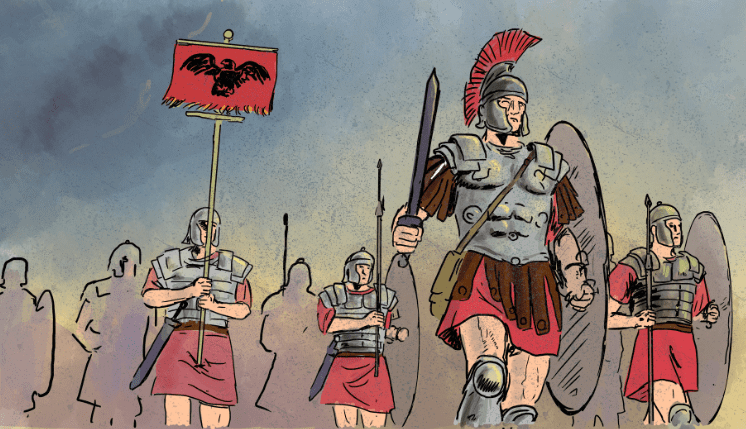
Spartacus – History – Part 4 of 4

Get ready for the grand finale! Our historical introduction to Spartacus: Rome Under Threat concludes with a dramatic showdown that will leave you on the edge of your seat.

Don’t miss out on this thrilling conclusion! Read the previous chapters here and prepare to be captivated by the story of Spartacus.
– Part 1
– Part 2
– Part 3

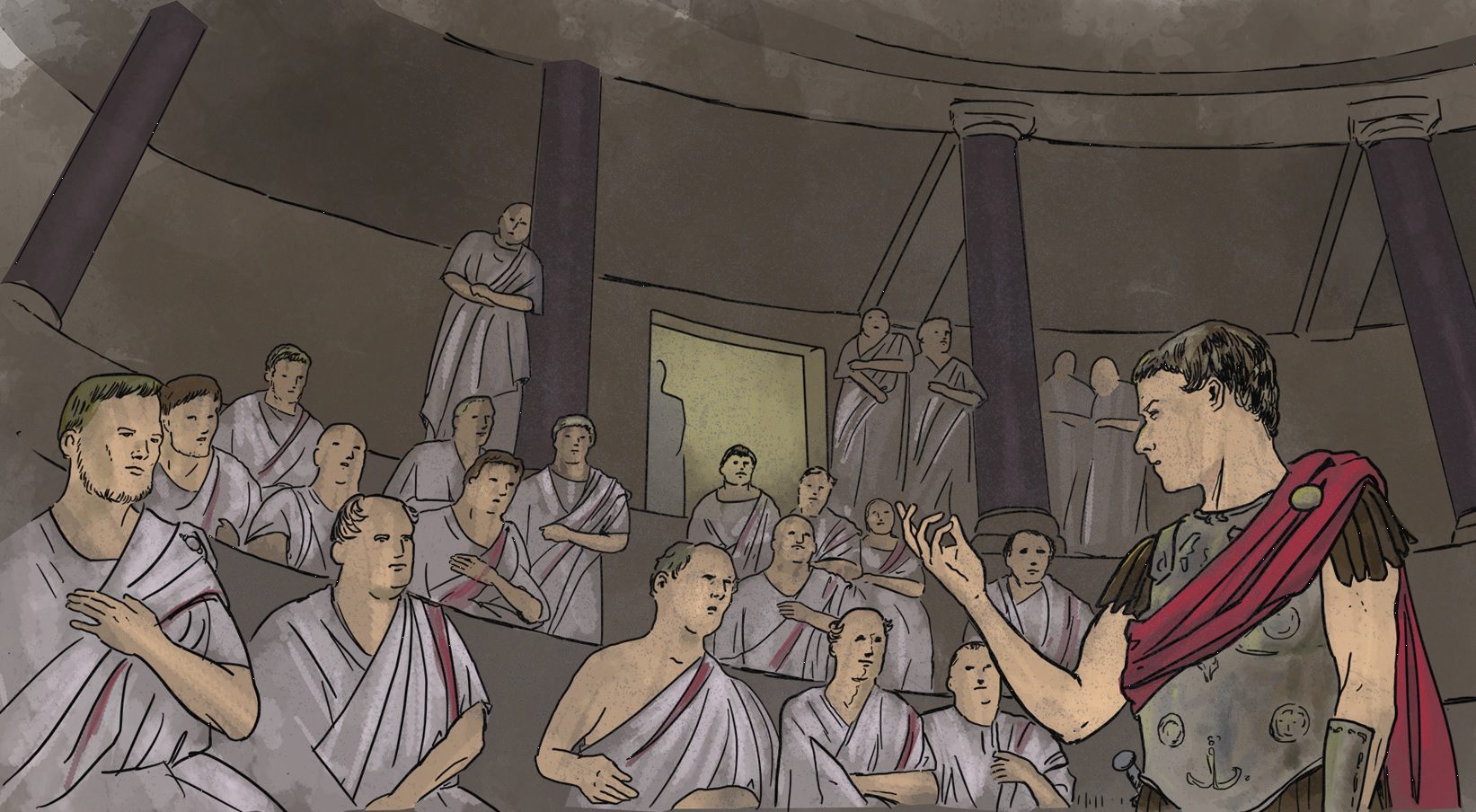
After suppressing Quintus Sertorius’s rebellion in Hispania, Pompey’s legions were returning to Italy. While sources differ on whether Crassus had specifically requested reinforcements, the Senate seized the opportunity of Pompey’s return to Italy and ordered him to bypass Rome and head south to assist Crassus in suppressing the slave revolt. To further bolster Crassus’s forces, the Senate also dispatched reinforcements under the command of Marcus Terentius Varro Lucullus, the proconsul of Macedonia.

Apprehended by the prospect of losing credit for the war to the arriving reinforcements, Crassus intensified his efforts to swiftly quell the slave revolt. Spartacus, anticipating Pompey’s approach, attempted to negotiate an end to the conflict with Crassus but was met with refusal.

As a result, Spartacus and his army broke through the Roman fortifications and retreated towards the Bruttium peninsula, followed closely by Crassus’s legions. In a skirmish with a portion of Spartacus’s army led by Gannicus and Castus, Crassus’s forces inflicted a significant defeat, killing 12,300 rebels.

Despite heavy losses, Crassus’ legions were struggling to contain Spartacus’s rebel army. The Roman cavalry, led by Lucius Quinctius, was ambushed and annihilated by escaping slaves. As the rebels’ morale faltered, they began to splinter, launching desperate attacks against Crassus’ forces.

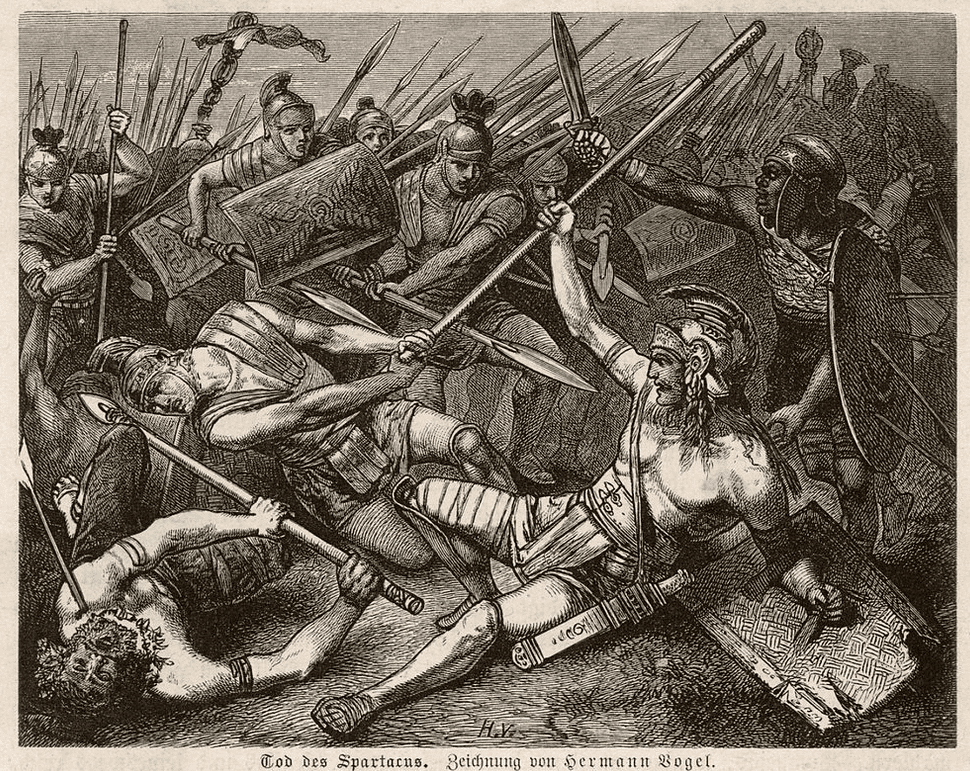
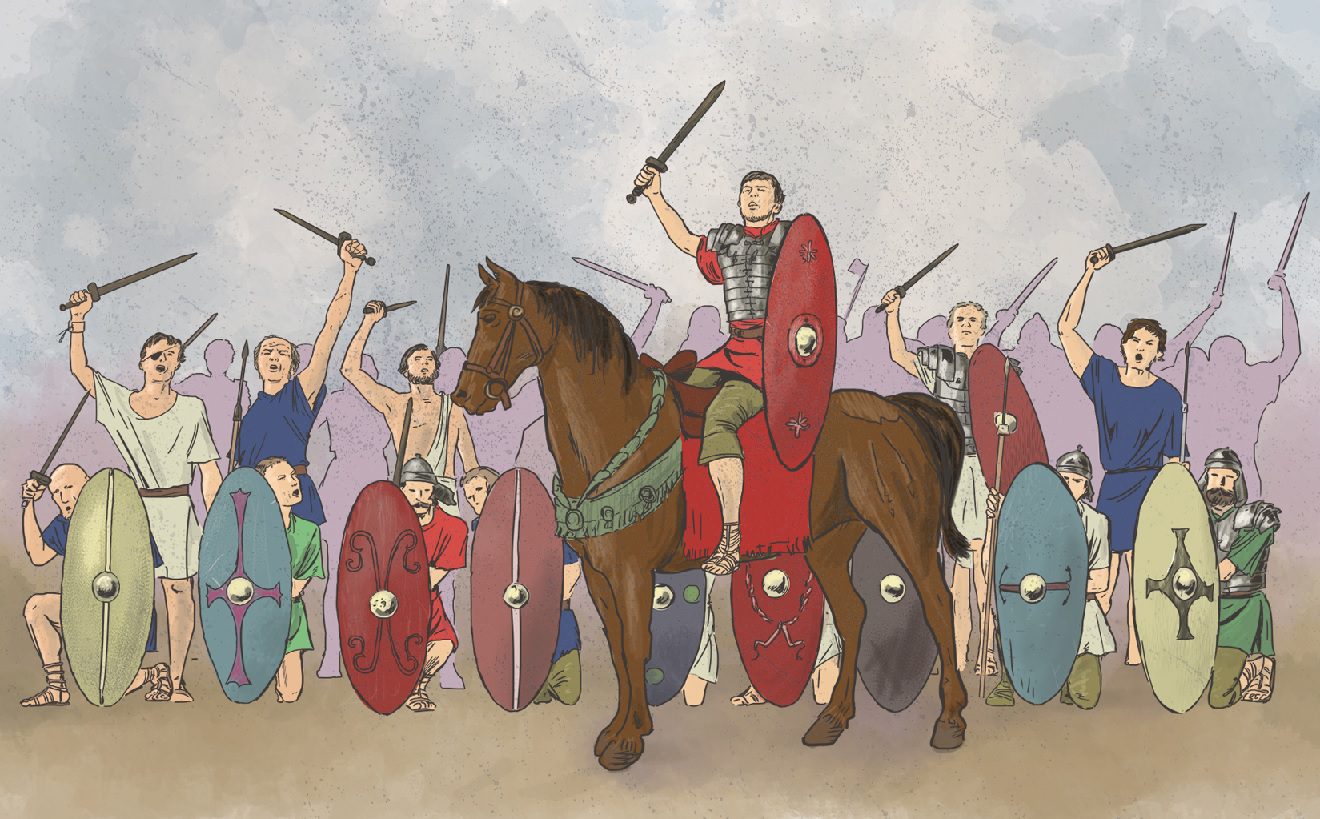
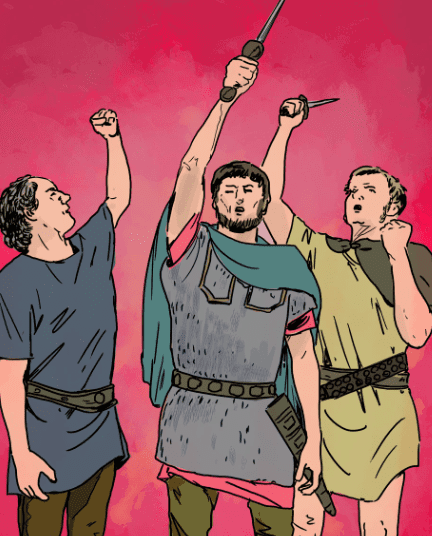
In a final, desperate stand at the Battle of the Silarius River, Spartacus, the legendary gladiator turned rebel leader, made a dramatic gesture that symbolized his unwavering determination. He slaughtered his horse before his troops, declaring that victory would bring more horses, but death would render them unnecessary. This act, perhaps imbued with a ritualistic significance, set the tone for the ensuing bloodbath.

Spartacus advanced with ferocious intent, cutting a swathe through the enemy ranks. His ultimate goal was believed to be Crassus, the Roman general leading the opposing forces. However, despite his valiant efforts, Spartacus fell in a hail of arrows, his body left unrecognizable amidst the carnage. The Roman victory was decisive, and Crassus, to instill fear in potential rebels, ordered the crucifixion of 6,000 surviving prisoners along the Appian Way. Though ancient historians claimed Spartacus perished in the battle, his body was never recovered. The Third Servile War was effectively ended, with Crassus claiming the decisive victory.

The war, however, was not yet over. Numerous fugitives attempted to escape northward, only to be intercepted by Pompey’s army in Etruria. Pompey’s annihilation of these remnants of the rebellion secured his own claim to fame and overshadowed Crassus’s earlier victory. He boasted that while Crassus had defeated the slaves in battle, he had eradicated the war’s very roots.

Despite his defeat and death, Spartacus’s legacy endured. His name became synonymous with rebellion and resistance, a symbol of hope for the oppressed. While Crassus and Pompey, the victorious generals, eventually met tragic ends, Spartacus’s memory lived on as a mythical hero of freedom.

Tod des Spartacus by Hermann Vogel.

The Third Servile War proved to be the final major slave uprising in Roman history. Rome would not experience another rebellion of this scale for centuries to come.

Spartacus – History – Part 3 of 4

Third chapter of a 4-part series on Spartacus: Rome Under Threat. If you haven’t read the previous parts you can check it out here:
– Part 1
– Part 2

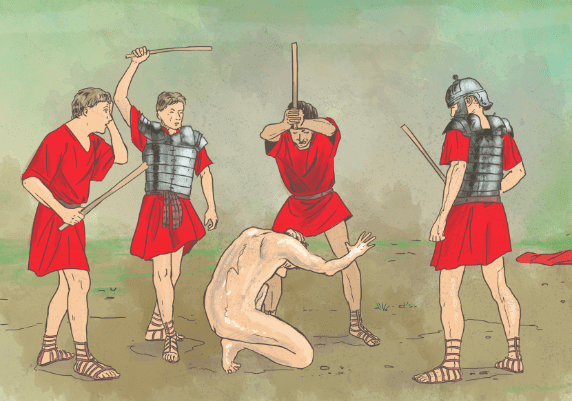
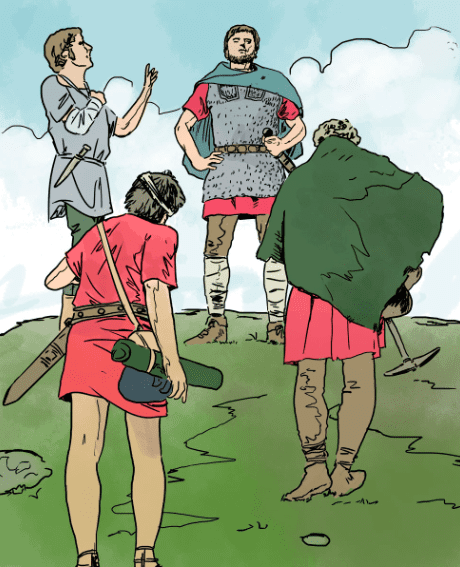
Despite conflicting accounts in ancient sources, it’s generally agreed that Spartacus and his followers were based in southern Italy by early 71 BC. Faced with this escalating rebellion, the Roman Senate appointed Marcus Licinius Crassus to quell the uprising. A veteran of Sulla’s civil war, Crassus commanded a substantial army of approximately 32,000 to 48,000 Roman infantry and auxiliaries. Known for his harsh discipline, Crassus revived the practice of decimation, executing one-tenth of a unit as punishment for cowardice or failure.

As Spartacus’ forces advanced northward, Crassus deployed six legions along the region’s borders. The initial confrontation occurred near Picenum according to Plutarch, while Appian places it in Samnium. Crassus dispatched two legions under Mummius to outflank Spartacus but forbade them from engaging. Despite these orders, Mummius attacked and was defeated. However, Crassus subsequently engaged Spartacus and achieved a decisive victory, inflicting approximately 6,000 casualties on the rebel army.

The tide turned in Crassus’ favor, with his legions winning several more battles and forcing Spartacus to retreat south through Lucania to the straits near Messina. According to Plutarch, Spartacus negotiated with Cilician pirates to transport him and 2,000 of his men to Sicily, where he planned to instigate a slave revolt. However, the pirates betrayed him, taking payment and abandoning the rebels. While minor sources mention attempts at raft and shipbuilding by the rebels, Crassus prevented their escape to Sicily.
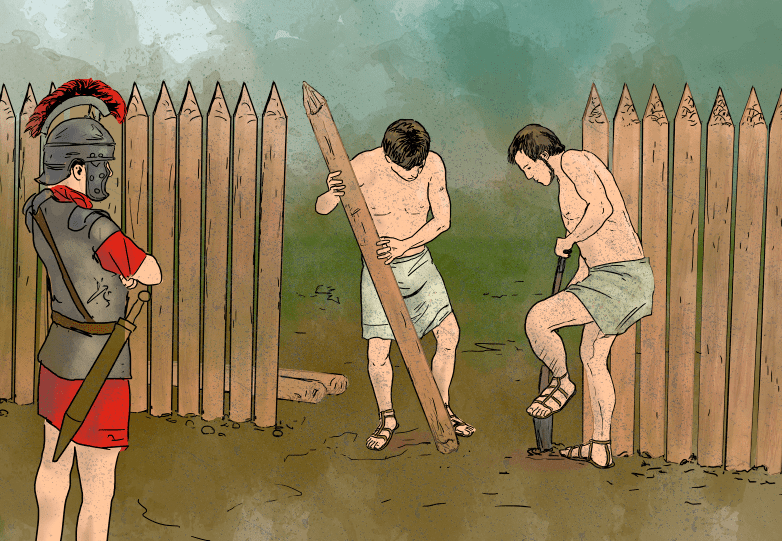
Spartacus’ forces retreated to Rhegium, followed by Crassus’ legions. Crassus fortified the isthmus at Rhegium, effectively besieging the rebels and cutting off their supplies.

Continue reading part 4…

Spartacus – History – Part 2 of 4

It is time for the second chapter of a 4-part series on Spartacus: Rome Under Threat. If you haven’t read the first part you can check it out here:
– Part 1

In the spring of 72 BC, the escaped slaves abandoned their winter camps and headed north towards Cisalpine Gaul.

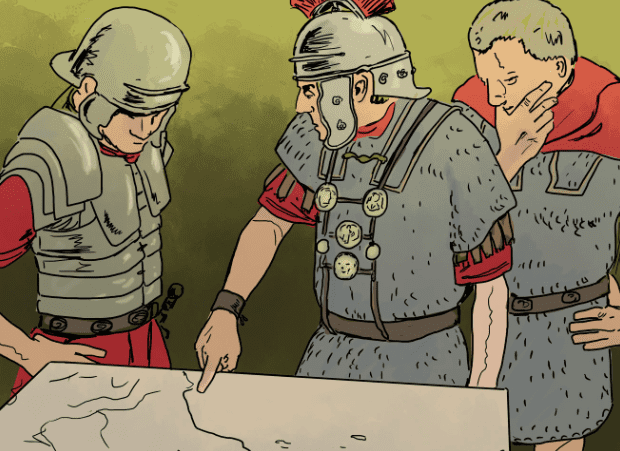
Alarmed by the rebellion’s scale and the defeats of praetorian armies under Glaber and Varinius, the Senate dispatched two consular legions commanded by Lucius Gellius and Gnaeus Cornelius Lentulus Clodianus. Initially triumphant, Gellius engaged around 30,000 slaves led by Crixus near Mount Garganus, decimating the rebels, and killing Crixus.

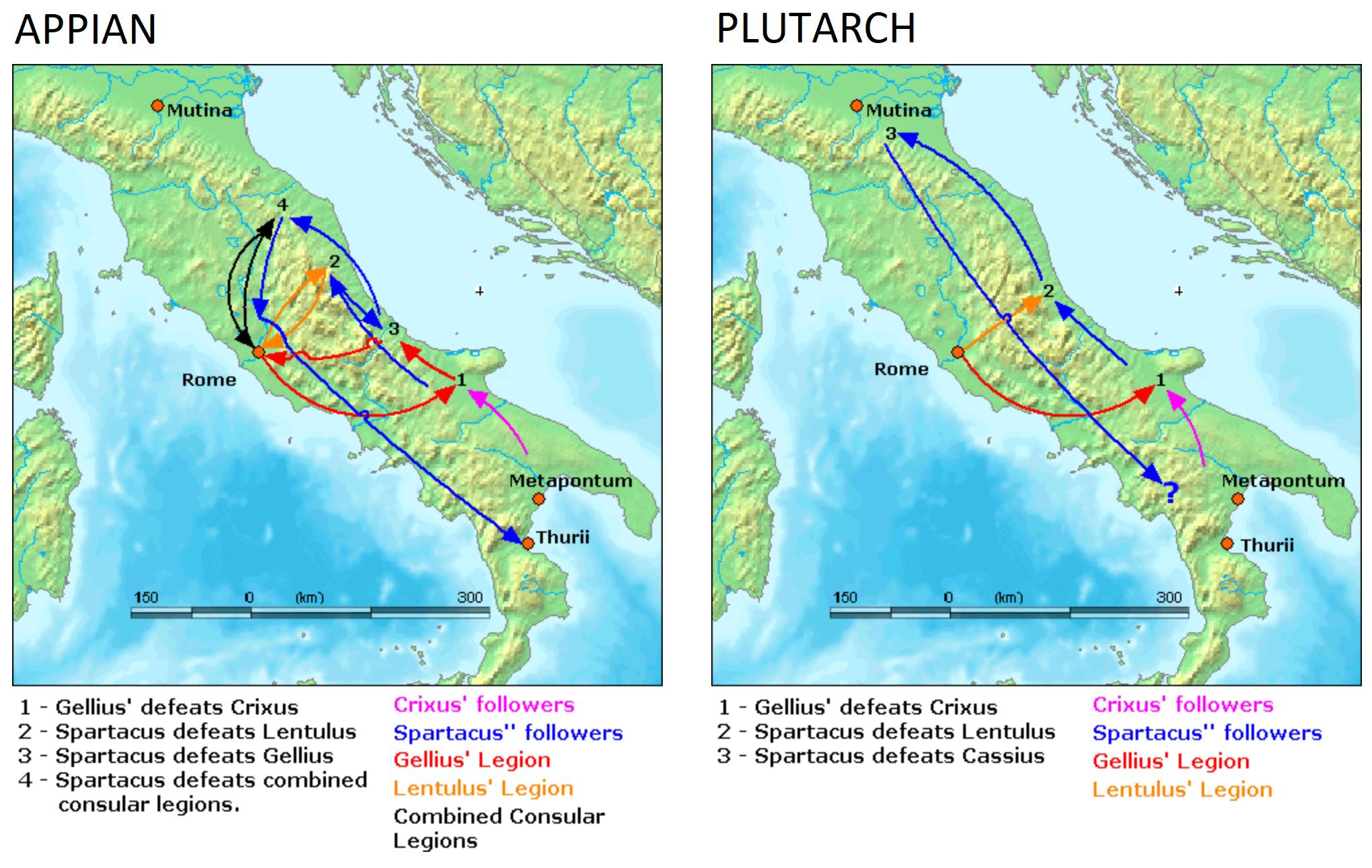
At this point, classical accounts diverge, reconverging only with Crassus’s involvement. Appian and Plutarch offer comprehensive, yet disparate narratives. Neither directly contradicts the other, but each presents unique events while omitting elements from the opposing account.

Appian’s Account
Appian portrays the victory over Crixus as the prelude to a complex series of maneuvers nearly bringing Spartacus’s forces to Rome. Following Crixus’s defeat, Gellius pursued Spartacus’s main force towards Cisalpine Gaul, while Lentulus blocked their path. Spartacus defeated Lentulus, then turned to crush Gellius, scattering the Roman legions. Appian claims Spartacus executed 300 captured Romans, forcing them to fight to the death as gladiators, avenging Crixus.

With 120,000 followers, Spartacus rapidly pushed north, burning supplies, killing prisoners, and slaughtering pack animals to accelerate his advance. The defeated consuls retreated to Rome, while Spartacus’s army pressed on. Another consular defeat at Picenum followed. Appian suggests Spartacus initially intended to march on Rome but changed course due to inadequate armament and lack of allied cities, retreating to southern Italy. The rebels seized Thurii, plundered the region, traded for arms, and clashed with repeatedly defeated Roman forces.

Plutarch’s Account
Plutarch offers a contrasting narrative. After Gellius’s victory over Crixus (described as “Germans”), Spartacus defeated Lentulus, seized Roman supplies, and advanced into northern Italy. The Senate recalled both consuls. Unlike Appian, Plutarch omits Spartacus’s engagement with Gellius and the Picenum battle. Plutarch details a conflict absent from Appian: Spartacus’s army advanced towards Mutina (modern Modena), where a Roman force led by Gaius Cassius Longinus was defeated. Plutarch then fast-forwards to Crassus’s initial clash with Spartacus in the spring of 71 BC, ignoring Appian’s Rome march and Thurii retreat. As Plutarch describes Crassus forcing Spartacus’s retreat from Picenum in 71 BC, it implies a winter withdrawal from Mutina to southern or central Italy. The reasons for this retreat, given the apparent opportunity to cross the Alps, remain unexplained.

Several theories suggest that Spartacus and his army may have reconsidered their escape route, opting for a return to the south rather than the perilous Alpine crossing. These possibilities include the daunting nature of the Alps, the intoxicating allure of conquering Rome after previous victories, or internal divisions within the rebellion that necessitated a change of plans.

Continue reading part 3…

Spartacus – History – Part 1 of 4

Get ready to dust off your sandals and step into the heart of ancient Rome!
Our game designer, José Manuel Neva, brings you the first chapter of a 4-part series on Spartacus: Rome Under Threat. Get ready to be immersed in this epic adventure through history!

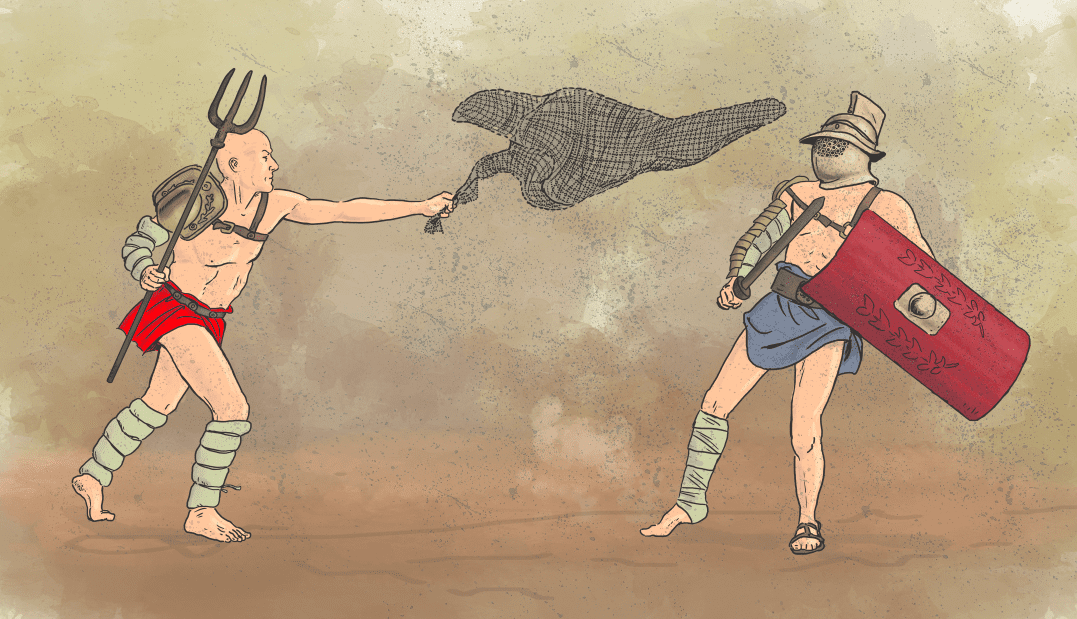
Slavery was a cornerstone of the Roman economy, providing a vast, inexpensive labor force acquired through trade and conquest. The immense and oppressed slave population ignited multiple rebellions. While the First and Second Servile Wars in Sicily were significant disturbances quelled by Roman military might, they were not perceived as existential threats to the Republic.

This perception shifted with the Third Servile War. In the spring of 73 BC, a group of 74 to 78 gladiators staged a violent escape from Lentulus Batiatus’ gladiatorial school in Capua. Defeating a Roman force, they seized military equipment and, with growing numbers, established a base on Mount Vesuvius.

Led by Spartacus and his formidable lieutenants, Crixus and Oenomaus, the revolt and subsequent raids swiftly captured the attention of the Roman authorities. Initially dismissed as a large-scale criminal outbreak rather than a full-blown rebellion, the uprising among the enslaved population posed a direct threat to the elite’s cherished estates and vacation retreats.

By late that same year, Rome responded by dispatching a military force under the command of a praetor. Gaius Claudius Glaber assembled a hastily gathered militia of 3,000 men (ad tumultum), a far cry from the disciplined legions. Underestimating the severity of the situation, Rome viewed the conflict as little more than a banditry problem. Glaber’s strategy was simple: besiege the rebels on Mount Vesuvius and starve them into submission.

However, Spartacus and his followers proved to be a formidable adversary. Despite their lack of formal military training, they demonstrated remarkable ingenuity and tactical acumen. Utilizing the natural resources of Vesuvius, they fashioned ropes and ladders from vines and trees, enabling a daring escape down the mountain’s treacherous cliffs. Seizing the opportunity presented by Glaber’s lack of a defensive encampment, the rebels outflanked his forces, inflicting a crushing defeat.

A second Roman force, led by Praetor Publius Varinius, was subsequently dispatched to quell Spartacus’ rebellion. Inexplicably, Varinius divided his army, placing Furius and Cossinius in command of separate contingents. While Plutarch indicates Furius commanded approximately 2,000 soldiers, the overall size of the expeditionary force and its composition—militia or legionaries—remains uncertain. These Roman troops were decisively defeated by the rebel slaves. Cossinius was killed, Varinius narrowly escaped capture, and the Romans lost their equipment.

These victories propelled Spartacus’ army to new heights. Tens of thousands of additional slaves joined their ranks, as did numerous local herdsmen and shepherds. By the winter of 73-72 BC, the rebel force had swelled to an estimated 70,000 strong. This period was marked by intensive training, armament, and expansion of their territory, which now included the cities of Nola, Nuceria, Thurii, and Metapontum.

However, these triumphs were not without cost. Oenomaus, a prominent rebel leader, perished, presumably in battle when the slave armies were plundering cities and towns in the south of Italy.

Continue reading part 2…

Prototype Spartacus: Rome Under Threat

Exciting news! We just received the prototype copy of Spartacus: Rome Under Threat, and we’re thrilled with the results!

The printer test is a success! However, please note that the prototype shown in the video is still under development and doesn’t reflect the final game artwork.

Get a sneak peek at the game components in the video we prepared!

Stay tuned for more updates on Spartacus and exciting new game additions coming soon. Don’t miss out – subscribe now!

Calling all history buffs and wargame enthusiasts!

I’m thrilled to announce that vassal playtesting for my new game, Spartacus: Rome Under Threat, is about to begin! ⚔️ (Probably by the end of this month or begining of April).

Spartacus: Rome Under Threat is a hex & counter operational game for 1-2 players that will immerse you in the heart of the Third Servile War. Lead slave armies or the Roman legions over 6 action-packed turns.

Playtesting will initially focus on the 2-player mode, with the solitaire mode to be released for testing later.

If you’re passionate about history, love operational gameplay, and want to help me refine Spartacus: Rome Under Threat, please let me know in the comments below! I’m eager to hear from you and truly appreciate any feedback you can provide.

Thanks in advance!