Today marks the end of our first year, and we’d like to reflect on our accomplishments and outline our plans for 2025.
2024 overview:
As you may know, we’re a small independent wargame publisher that embarked on this journey at the beginning of 2024. While our goal was to release our first game this year, establishing the company and building our brand consumed a significant portion of our time.
Throughout 2024, our brand has evolved significantly thanks to your invaluable support and feedback. Your input has been crucial in shaping our vision and determining the types of wargames we want to offer you. Click here to learn more about our three product lines.
This year, we officially announced six games that are now part of our “Incoming!” section (games currently under development). We’ve also seen impressive community growth: 21,000 website visits, nearly 500 newsletter subscribers, nearly 900 followers on X, 530 on Facebook, 580 on Instagram and 30 on Youtube. On Board Game Geek, we’ve garnered 7 fans and 15 subscribers. We are incredibly grateful for everyone who follows us and shows interest in our work.
Feel free to contact us anytime through social media, the contact form, or email. We welcome all feedback as we strive to enhance this hobby together.
While we didn’t achieve our initial goal of printing games in 2024, we successfully brought Iwo Jima to your tables as an easy-to-craft print-and-play game available to all newsletter subscribers. If you haven’t already, check it out here.
2024 flew by, and we often felt we needed more time to accomplish our goals. However, reflecting on this final monthly update, we realize we achieved more than we initially expected. This newfound confidence fuels our energy and enthusiasm as we look ahead to 2025.
What are our plans for 2025? Keep reading below!
2025 plans:
We have a wealth of ideas and are always striving for progress, but we understand the importance of focusing on one thing at a time. Therefore, we’ll share our general plan while keeping a few surprises in store throughout the year.
Pre-order System: Early 2025, we’ll introduce a pre-order system on our website. We anticipate 1-2 pre-order waves throughout the year, each featuring two games. You can choose to pre-order one or both games within a wave, potentially benefiting from combined shipping costs. To initiate the printing process, we require 500 pre-orders between both games. Pre-order at a discounted price and help us bring this project to life! Your payment is only processed if we reach the 500-order goal. No further discounts will be offered after the pre-order period. Games are expected to ship within 4-6 months of pre-order completion. Directly purchasing from our website will be the only way to acquire our games. Pre-ordering is the best way to guarantee your copy, as stock may be very limited or unavailable after the pre-order period. Reprinting is possible but not guaranteed. We’ll provide more details when announcing the first wave of pre-order games. We deeply appreciate all pre-order participants, who we consider valuable members and contributors to our brand.
Game Announcements: Exciting game announcements are on the horizon! We’ll gradually reveal new titles throughout the year, starting in January with the winner of our first prototype contest. Stay tuned for these exciting reveals!
Polls and Surveys: Your feedback is invaluable to us. We encourage you to share your thoughts via email or social media comments. To further enhance your involvement, we’ll include a brief poll or survey in each monthly update. This valuable input will help us improve.
We’re incredibly excited about 2025 and eagerly anticipate seeing our first games on your tables!
We are grateful for your continued support throughout the year.
As we prepare to release our first projects from our Incoming! section, we’re excited to introduce you to the three product lines at Neva Wargames.
We’ve worked diligently to maintain a consistent, compact format across all lines, ensuring the best possible gaming experience. All boxes are book-sized, with varying depths to accommodate different components.
Get ready to expand your game collection without sacrificing shelf space! Our compact designs make storage a breeze.
Below is a brief overview of the unique features of each line:
Product Lines
Fast, furious wargaming on the go. Perfect for short breaks.
Our flagship line focuses on a balance of depth and gameplay.
The ultimate gaming experience. For wargamers who enjoy larger games.
Box Sizes
9.45 x 6.50 x 1.58 in
9.45 x 6.50 x 2.17 in
9.45 x 6.50 x 2.76 in
24 x 16,5 x 4 cm
24 x 16,5 x 5,5 cm
24 x 16,5 x 7 cm
Mounted Map Sizes
17.32 x 11.81 in
17.32 x 26.62 in
17.32 x 29.53 in
44 x 30 cm
44 x 60 cm
44 x 75 cm
Counters*
60-180
120-300
240-420
Cards**
42
52
72
Price***
35 € $36,05
45 € $46,34
55 € $56,64
* Counters might vary depending on the type of game. ** Not all games might contain cards. *** Prices are estimated, and VAT and shipping are not included. Prices might change due to market conditions.
Deck the halls! November is flying by, and the holiday season is just around the corner. Let’s take a look back at the month’s highlights and get ready to celebrate.
Sea & Steel Crowdfunding Campaign:
The Sea & Steel game board is shaping up beautifully. We are in the final stages of perfecting the cards, player aid sheets and rulebook.
We’re committed to providing the best possible user experience. Your feedback helped us improve the map by making it larger and rectangular. Thanks!
We’re excited to share the final design of the counters. We hope you like them as much as we do!
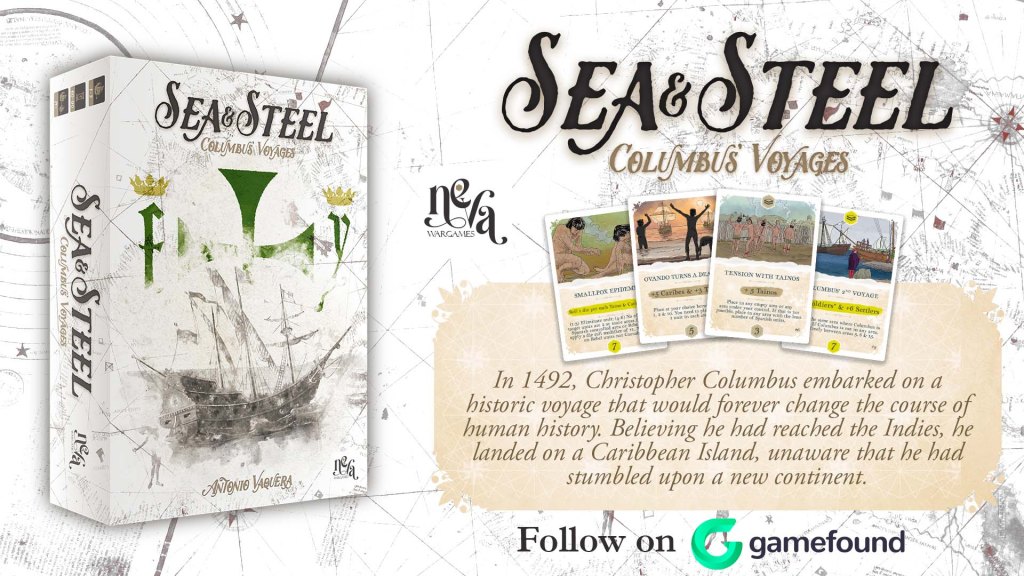
Sea & Steel: Columbus’s Voyages is coming to Gamefound! Join our preview campaign now to show your support and be the first to know about our official launch. We’re hard at work finalizing the game and preparing an unforgettable crowdfunding experience. Stay tuned for exciting updates and the official campaign launch date!
Collaborations:
Last call to get your ticket for MdG24 Online Wargames Convention (organized by the Mesa de Guerra team). This is an event tailor-made for all of us, bringing us together from our homes through technology!
We know that in-person conventions have their magic (and we don’t want to change that!), but with MdG24, we’re opening a new door for those who want to enjoy everything wargaming has to offer without leaving their favorite armchair or having those conversations that might not happen at a physical convention because we’re too eager to play.
WHEN? Thursday, December 12th to Sunday, December 15th, 2024.
WHERE? Exclusive Discord server for the MdG24 Online Convention.
THURSDAY 12th 1. XMAS PRESENT: We have a top-secret welcome gift for all attendees! Check our official publisher section on the MdG24 Discord server for the big reveal.
Support the games you’re most excited about by signing up and adding them to your wishlist. The most wishlisted titles will climb the development queue, meaning you have a direct impact on our release schedule!
Note: All images shown for upcoming titles are provisional. Final artwork will be revealed as the games progress to later development stages.
Now, let’s dive into the current status of each project, listed in order of wishlist popularity and development status. Remember, a project won’t be ready for a Gamefound campaign until it reaches 90-100% completion.
We’re excited to announce that Prototype version 5 is complete! This means the final playtesting wave is imminent. Additionally, our new solitaire mode is in the works and is expected to be finished by December.
We’ve been busy preparing our first two crowdfunding campaigns, so development on the game has slowed down this month. We’ll be back to full speed soon for the final development phase before release.
Initial setup (12th July 1943 scenario) Prototype version.
Fran Mariscal has assembled a large group of playtesters. Multiple playtesting sessions are currently underway using the Vassal module. Full steam ahead!
Our game designer has been fine-tuning the game ahead of playtesting. Jesús Pérez will continue working on his game throughout December to begin vassal playtesting soon.
As we wrap up the final days of October, we’re excited to share our latest updates with you! Get ready for some uplifting and energizing news that we can’t wait to tell you all about!
Sea & Steel Crowdfunding Campaign:
The Sea & Steel game board is shaping up beautifully. We are in the final stages of perfecting the cards and counters, and we will be sharing exciting graphic updates about this title very soon.
Sea & Steel: Columbus’s Voyages is coming to Gamefound! Join our preview campaign now to show your support and be the first to know about our official launch. We’re hard at work finalizing the game and preparing an unforgettable crowdfunding experience. Stay tuned for exciting updates and the official campaign launch date!
This is exciting news! We’re thrilled to announce that we’re developing a Board Game Arena version of Sea & Steel: Columbus’ Voyages, and we’re inviting our campaign preview followers to participate in a limited-time closed alpha test.
Experience Sea & Steel: Columbus’ Voyages before anyone else and share your valuable feedback with us. Additionally, we’ve included the BGA version as a stretch goal in our campaign preview – if everything goes smoothly, the final digital version will be launched within six months after the physical copies are shipped. Our priority is to ensure that all backers receive their physical copies first while also having the chance to play online.
What do you need for joining? 1) Have a BGA account. 2) Follow the Sea & Steel Campaign Preview.
We’re thrilled to officially announce the MdG24 Online Wargames Convention, organized by the Mesa de Guerra team. This is an event tailor-made for all of us, bringing us together from our homes through technology!
We know that in-person conventions have their magic (and we don’t want to change that!), but with MdG24, we’re opening a new door for those who want to enjoy everything wargaming has to offer without leaving their favorite armchair or having those conversations that might not happen at a physical convention because we’re too eager to play.
WHEN? Thursday, December 12th to Sunday, December 15th, 2024.
WHERE? Exclusive Discord server for the MdG24 Online Convention.
REGISTRATION Standard Ticket: €10 Author-Publisher Ticket: €5
ACTIVITIES: Historical talks, demos, games, tournaments, strategy guides, interviews, tutorials, and many more surprises. Whether you’re a veteran or a newbie, there’s something for everyone! We hope to see you there!
ADDITIONAL INFO The event is non-profit. All proceeds will cover expenses such as Discord Premium, technical equipment, and more. Any surplus will be donated to a charity that we will announce in due course.
Best regards from the MdG24 team: Sergio Ortega, Ibai Zabaleta, Javier Salamanca, Jarib Flores, Ximo Aracil, Santiago González, José Manuel Neva, and Pako Gradaille.
Neva Wargames & MdG 24: Prototype Contest
Are you a game designer? Don’t miss this golden opportunity!
As we embark on an exciting new chapter with the launch of Mesa de Guerra Online and the upcoming Neva Skirmish game line, we’re thrilled to announce our inaugural collaborative prototype contest.
Join us in shaping the future of gaming! Still accepting proposals!
Learn more about the contest and its guidelines here: Prototype Contest
INCOMING!
Support the games you’re most excited about by signing up and adding them to your wishlist. The most wishlisted titles will climb the development queue, meaning you have a direct impact on our release schedule!
Note: All images shown for upcoming titles are provisional. Final artwork will be revealed as the games progress to later development stages.
Now, let’s dive into the current status of each project, listed in order of wishlist popularity and development status. Remember, a project won’t be ready for a Gamefound campaign until it reaches 90-100% completion.
Development is progressing steadily as we refine our vision. Prototype version 4 is complete and preparing for the final playtesting wave. Minor adjustements were made to improve the historical 2 -player game mode. Solitaire lovers, rejoice! A new solitaire mode is on its way.
Playtesting session with the physical prototype.
Initial Phase: Completed (15/15) Development Phase: In progress (55/60) Illustration/Graphic Design: In progress (5/15) Proof reading and final revision: Pending (0/10)
Initial setup (12th July 1943 scenario) Prototype version.
We’re diligently refining our rulebook and making improvements to the game.We’re currently conducting internal playtests to ensure it’s ready for community feedback.
Initial Phase: Completed (15/15) Development Phase: In progress (45/60) Illustration/Graphic Design: In progress (0/15) Proof reading and final revision: Pending (0/10)
The initial phase of our project has been successfully completed. The first prototype version is now ready, and we will be starting playtesting sessions very soon. Stay tuned for further updates.
Initial Phase: Completed (15/15) Development Phase: In progress (5/60) Illustration/Graphic Design: In progress (0/15) Proof reading and final revision: Pending (0/10)
The game designer has already implemented the basic mechanics (CDG) and is now conducting internal tests and adjustments. More information about this project will be available soon.
Initial Phase: Completed (15/15) Development Phase: In progress (5/60) Illustration/Graphic Design: In progress (0/15) Proof reading and final revision: Pending (0/10)
Our latest title has just been added to our INCOMING! list. This marks our debut in the Neva Skirmish game series, with more exciting titles set to follow shortly. Currently, the designer is finalizing preparations for the playtesting phase, as the initial stages are nearly complete.
Prototype Version.
Initial Phase: Completed (10/15) Development Phase: In progress (0/60) Illustration/Graphic Design: In progress (0/15) Proof reading and final revision: Pending (0/10)
Game Overall Status: 10%
October was a whirlwind of activity! We’re excited about the progress we’ve made on our latest project. While we can’t spill the beans just yet, we promise it will be worth the wait. Stay tuned for more updates. Got questions? Leave a comment below!
This is exciting news! We’re thrilled to announce that we’re developing a Board Game Arena version of Sea & Steel: Columbus’ Voyages, and we’re inviting our campaign preview followers to participate in a limited-time closed alpha test.
Experience Sea & Steel: Columbus’ Voyages before anyone else and share your valuable feedback with us. Additionally, we’ve included the BGA version as a stretch goal in our campaign preview – if everything goes smoothly, the final digital version will be launched within six months after the physical copies are shipped. Our priority is to ensure that all backers receive their physical copies first while also having the chance to play online.
What do you need for joining? 1) Have a BGA account. 2) Follow the Sea & Steel Campaign Preview.
If you are a game designer, don’t let this remarkable opportunity slip through your fingers!
As we enthusiastically unveil the launch of Mesa de Guerra Online and the highly-anticipated Neva Skirmish game line, we are excited to announce a truly revolutionary event for imaginative creators: the inaugural collaborative prototype contest between Neva Wargames and Mesa de Guerra! Get ready to showcase your creativity and join us in shaping the future of gaming—this is your chance to leave your mark in an epic new era!
This is your chance to shine! Whether you’re a seasoned game designer or a passion-fueled newcomer, you can submit up to two original proposals that showcase your unique vision.
Mark your calendars! We’ll be accepting submissions from October 15, 2024, to December 1, 2024. Don’t miss out on the excitement, as the results will be revealed on December 15, 2024.
Incredible Prizes Await!
First Prize: Your prototype will take its seat in the Incoming! section of Neva Wargames!
Second and Third Prizes: Win a copy of our much-anticipated release, Sea & Steel: Columbus’ Voyages.
All remaining participants will have a chance to enter a raffle for a copy of Sea & Steel: Columbus’ Voyages too!
Dive into the details! Download the contest guidelines to discover our rules and how you can participate.
This is your moment—ignite your creativity and share your vision with the world. Join us in this thrilling adventure, and let your game design dreams take flight! Don’t wait; submit your ideas and become a part of gaming history!
The 1st Mesa de Guerra Online is virtual event that will take place from December 12th to 15th on their Discord server. In addition to this contest, they are preparing much more, so stay tuned, as they will reveal more information in the coming days and open ticket sales. Don’t miss this great opportunity! I hope to see you all there!
As an author, I couldn’t be happier and more satisfied with the experience at the Pax Lúdica event in Cádiz. Many people gathered to learn about the game, eager to have the mechanics explained, and we hosted games every day throughout the event.
“Rebellion and Punishment: The War of the Alpujarras” is a historical simulation game featuring a card-driven engine that recreates the events of the rebellion led by the Moriscos, the descendants of the former Muslim inhabitants of the Nasrid kingdom of Granada, against the Catholic Monarchs’ attempt to impose complete cultural assimilation under Philip II.
The Moriscos planned to revolt on January 1, 1569, coinciding with the anniversary of the Christian troops’ first entry into Granada. They intended to present themselves in the city with 8,000 warriors disguised as Turks to set ablaze the Albaicín district, where the Morisco population resided within the city’s walls.
However, the uprising erupted spontaneously and uncontrollably by the rebel leaders during Christmas of 1568, leading to the failed attempt to seize Albaicín. Granada remained safe, but various towns in the Alpujarras rose up, marking the beginning of a brutal and relentless war that put the Hispanic monarchy of Philip II on the brink. Fernando de Valor, a descendant of the ancient Umayyad dynasty that once ruled the Caliphate of Córdoba, proclaimed himself king of the Moriscos as Aben Humeya.
At that moment, the game began, with several towns in the Alpujarras revolting after the failed coup attempt in Granada, and the leaders and rebel forces quickly spreading the rebellion throughout all the towns they encountered.
The number of soldiers available from the royal army was very limited; most of the quality troops were in Flanders fighting against the Protestant Orangists or in Italy, holding back the Turks. The only forces at hand consisted of local militias, some veteran soldiers from the tercio close to retirement, tasked with garrisoning coastal defenses against incursions from North African pirates, and little else.
While the Morisco troops are comprised of Monfíes, guerrillas who have spent decades practicing banditry and resisting Castilian forces, the Gandules, ancient municipal militias of the Kingdom of Granada, organized by neighborhoods around mosques, will soon be joined by Berbers from North Africa sent by Ali Pasha. These Mujahideen will come to fight for the defense of Islam, accompanied by expert military advisors and elite troops of Janissaries dispatched by the Turkish Sultan.
Aben Humeya emerges with his troops in Juviles, while Aben Aboo lays siege with his forces to a small garrison that has managed to barricade itself in the tower of Órgiva. Aben Farax, the most combative leader at the forefront of the feared Monfíes, waiting for his opportunity in the Sierra Nevada after hastily retreating from Granada. El Galipe leads the uprising in Malaga and El Gorri in Almería, in the Andarax valley.
In this initial phase of the war, known as “The Marquises’ Campaign,” the repression of this uprising is handled by two nobles embroiled in long-standing family feuds stemming from the Castilian civil war between the Beltranajosos and the Isabelinos. On one side is the Marquis of Mondejar, General Captain of Granada and a member of the Mendoza family, who holds a more negotiable and conciliatory approach. On the other side is the Marquis of Los Velez, from the Fajardo family, who receives a letter from Philip II instructing him to prevent the spread of the rebellion to Eastern Spain from Murcia, and to suppress the attempts at rebellion in neighboring Almería as best he can.
Each player draws seven cards from the unique game deck and plays six impulses, with the option to keep one card for the next turn; if they do, they will only draw six cards this time.
During the first turn, set during the Christmas of 1568, the Morisco player has the initiative and plays first. Their opening card is a mandatory initial event: the coronation of Aben Humeya as king of the Moriscos, followed by the use of action points. With these points, the Morisco player can activate their leaders, spending activation points equal to their leader’s strategic capacity. Leaders have three strategic capacities: 1, 2, and 3. The lower the value, the better the leader, requiring fewer action points to activate.
At the game’s start, most populations are not in rebellion; only seven villages in the Alpujarras, one in Málaga, and another in Almería in the Andarax valley are. The rest, in theory, remain loyal to the crown, with the population torn between the desire for rebellion, fear of repression, and some truly loyal subjects who wish to remain uninvolved in the uprising.
When the rebel troops entered a village, they gathered the inhabitants in the plaza, burned churches, and ruthlessly pursued old Christians and the religious, compelling the population to join them. Many willingly joined, but others had no choice but to comply.
In the game, when a Moorish troop enters a settlement, it spends an additional movement point to incite an uprising and join the rebellion. Conversely, when a royal troop enters a rebel settlement, it also expends an extra movement point to quell the uprising. If troops from both sides are present in a settlement, an armed confrontation occurs; the victor of this battle automatically gains control of the settlement.
Soon, the long-awaited North African and Turkish aid arrives on the shores, consisting of mujahideen summoned to defend the Islamic faith and Janissaries led by the Turkish captain Hosein.
The city of Almería is soon besieged, with its garrison under the command of García de Villarroel desperately calling for aid from both the Marquis of Mondejar and the Marquis of Vélez.
During the initial phases, the Moorish rebellion spreads rapidly, successfully laying siege to and capturing significant cities such as Málaga and Almería. Consequently, the Victory Points quickly shift in favor of the insurgents.
Aben Aboo and El Galipe await from within the walls of the city of Málaga, recently taken by the Moriscos, for the arrival of Antonio de Luna and his troops. Meanwhile, Aben Humeya is stationed in Alfarnate.
At the end of each turn, there is a rebellion expansion phase where the Morisco player rolls a die. This determines a population within the region rolled at random, where they can spontaneously deploy a troop of gandules.
Two of the most charismatic and well-known Christian leaders, both with extensive military experience, arrive in the conflict zone: Luis de Recasenz and Álvaro de Bazán, accompanied by seasoned tercio units from Italy.
At the start of each turn, a die is rolled to determine which player has the initiative and plays their cards first. The player who did not have the initiative in the previous turn receives a +1 bonus to their die roll for this determination.
Ultimately, to summarize, the games played during the Pax Lúdicas featured numerous remarkable circumstances, some epic in nature, such as Aben Humeya’s attempted siege of Granada, taking advantage of the Marqués de Mondejar’s army being engaged in the Alpujarras, or the glorious defense of Lorca by the Marqués de Mondejar, who, without any troops—only the garrison—staunchly resisted Aben Farax’s assaults until the latter was forced to retreat with the arrival of Christian reinforcements, failing to capture the Murcian city. There was also the Conquest of Málaga by Aben Aboo. The players thoroughly enjoyed these scenarios, and I relished teaching them. I look forward to sharing ongoing developments in the game’s progress, along with the upcoming testing sessions.
My heartfelt thanks to Pedro Mayorga, Manuel Sancho, Raúl Nuñez, José Martinez, and José Antonio Polo for dedicating their time during the event to play Rebelión Y Castigo and for their consistently positive and constructive contributions to its enhancement. Special thanks to Francisco Javier from In Ludo Véritas for his support, as well as José Manuel Neva for believing in the development of this game, and to Sergio and his fellow Pax Lúdica members for their tireless efforts organizing the Cádiz event, which benefits all wargaming enthusiasts. A big hug to all!
As the song goes, ‘Wake me up when September ends,’ and here we are. With September almost behind us, we’re thrilled to share the latest updates from our historical board game collection. Prepare to be intrigued as we unveil enticing details about our upcoming historical board games.
Wargame Convention Pax Lúdicas in Cádiz:
The 4th Pax Lúdica Conference is a wargames and board game convention that will be held on September 27, 28, and 29, 2024, at the Edificio Constitución 1812 (formerly known as Aulario La Bomba) of the University of Cádiz.
The Edificio Constitución 1812 has a central patio where attendees can set up games to play, join others’ games, and where both publishers and authors can demonstrate their latest releases and prototypes of upcoming games.
This is an event we hold dear to our hearts, and we wouldn’t miss it for the world. We will be showcasing our prototypes for gameplay sessions and demonstrations. Additionally, there will be Neva Wargame merchandise available for the organization’s raffles.
Gamefound Crowdfunding Campaign:
Sea & Steel: Columbus’s Voyages is coming to Gamefound! Join our preview campaign now to show your support and be the first to know about our official launch. We’re hard at work finalizing the game and preparing an unforgettable crowdfunding experience. Stay tuned for exciting updates and the official campaign launch date!
INCOMING! Whislist
Support the games you’re most excited about by signing up and adding them to your wishlist. The most wishlisted titles will climb the development queue, meaning you have a direct impact on our release schedule!
Note: All images shown for upcoming titles are provisional. Final artwork will be revealed as the games progress to later development stages.
Now, let’s dive into the current status of each project, listed in order of wishlist popularity and development status. Remember, a project won’t be ready for a Gamefound campaign until it reaches 90-100% completion.
Development on our game is nearly complete at 95%, and we’re excited to announce that the Gamefound campaign is in the works!
Initial Phase: Completed (15/15) Development Phase: In progress (60/60) Illustration/Graphic Design: In progress (15/15) Proof reading and final revision: Pending (5/10)
Development is progressing steadily as we refine our vision. Prototype version 3 is complete and undergoing internal playtesting throughout August. Minor adjustements were made to improve the historical 2 -player game mode. Solitaire lovers, rejoice! A new solitaire mode is on its way.
Playtesting session with the physical prototype.
Initial Phase: Completed (15/15) Development Phase: In progress (50/60) Illustration/Graphic Design: In progress (5/15) Proof reading and final revision: Pending (0/10)
Initial setup (12th July 1943 scenario) Prototype version.
We’re diligently refining our rulebook and making improvements to the game.We’re currently conducting internal playtests to ensure it’s ready for community feedback.
Initial Phase: Completed (15/15) Development Phase: In progress (45/60) Illustration/Graphic Design: In progress (0/15) Proof reading and final revision: Pending (0/10)
The initial phase of our project has been successfully completed. The first prototype version is now ready, and we will be starting playtesting sessions very soon. Stay tuned for further updates.
Initial Phase: Completed (15/15) Development Phase: In progress (5/60) Illustration/Graphic Design: In progress (0/15) Proof reading and final revision: Pending (0/10)
The game designer has already implemented the basic mechanics (CDG) and is now conducting internal tests and adjustments. More information about this project will be available soon.
Initial Phase: Completed (15/15) Development Phase: In progress (0/60) Illustration/Graphic Design: In progress (0/15) Proof reading and final revision: Pending (0/10)
Our latest title has just been added to our INCOMING! list. This marks our debut in the Neva Skirmish game series, with more exciting titles set to follow shortly. Currently, the designer is finalizing preparations for the playtesting phase, as the initial stages are nearly complete.
Prototype Version.
Initial Phase: Completed (5/15) Development Phase: In progress (0/60) Illustration/Graphic Design: In progress (0/15) Proof reading and final revision: Pending (0/10)
Get ready for the grand finale! Our historical introduction to Spartacus: Rome Under Threat concludes with a dramatic showdown that will leave you on the edge of your seat.
Don’t miss out on this thrilling conclusion! Read the previous chapters here and prepare to be captivated by the story of Spartacus. – Part 1 – Part 2 – Part 3
After suppressing Quintus Sertorius’s rebellion in Hispania, Pompey’s legions were returning to Italy. While sources differ on whether Crassus had specifically requested reinforcements, the Senate seized the opportunity of Pompey’s return to Italy and ordered him to bypass Rome and head south to assist Crassus in suppressing the slave revolt. To further bolster Crassus’s forces, the Senate also dispatched reinforcements under the command of Marcus Terentius Varro Lucullus, the proconsul of Macedonia.
Apprehended by the prospect of losing credit for the war to the arriving reinforcements, Crassus intensified his efforts to swiftly quell the slave revolt. Spartacus, anticipating Pompey’s approach, attempted to negotiate an end to the conflict with Crassus but was met with refusal.
As a result, Spartacus and his army broke through the Roman fortifications and retreated towards the Bruttium peninsula, followed closely by Crassus’s legions. In a skirmish with a portion of Spartacus’s army led by Gannicus and Castus, Crassus’s forces inflicted a significant defeat, killing 12,300 rebels.
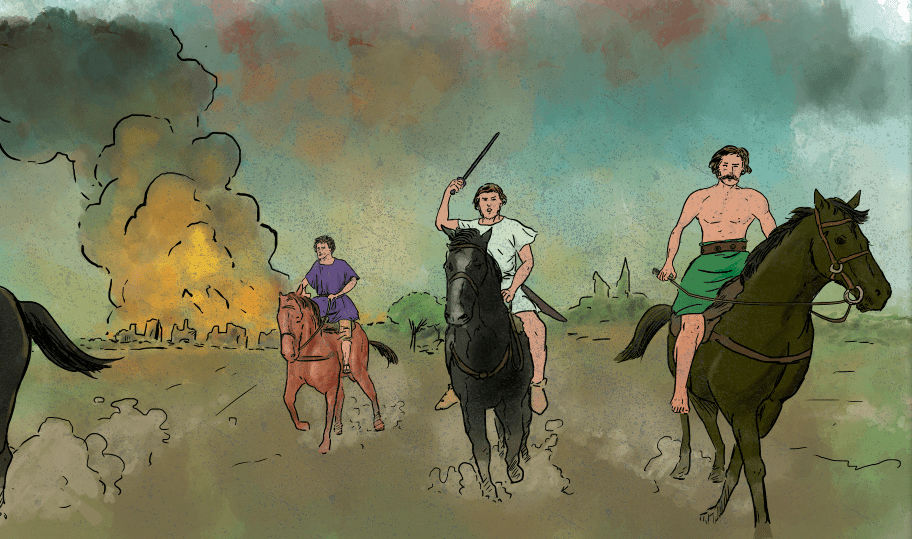
Despite heavy losses, Crassus’ legions were struggling to contain Spartacus’s rebel army. The Roman cavalry, led by Lucius Quinctius, was ambushed and annihilated by escaping slaves. As the rebels’ morale faltered, they began to splinter, launching desperate attacks against Crassus’ forces.
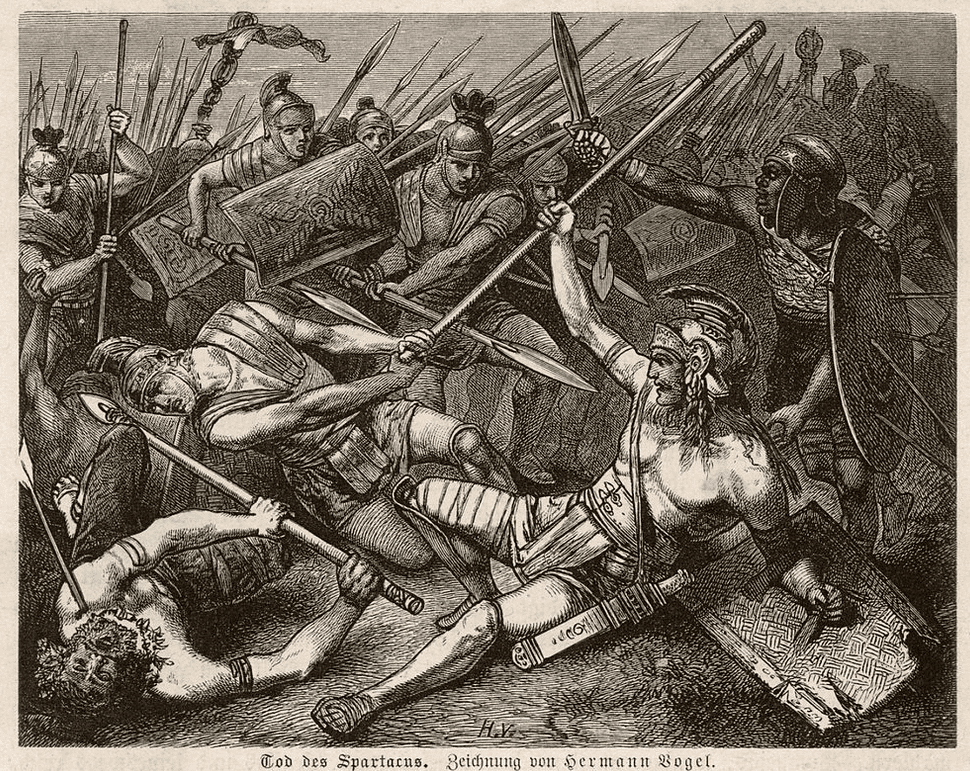
In a final, desperate stand at the Battle of the Silarius River, Spartacus, the legendary gladiator turned rebel leader, made a dramatic gesture that symbolized his unwavering determination. He slaughtered his horse before his troops, declaring that victory would bring more horses, but death would render them unnecessary. This act, perhaps imbued with a ritualistic significance, set the tone for the ensuing bloodbath.
Spartacus advanced with ferocious intent, cutting a swathe through the enemy ranks. His ultimate goal was believed to be Crassus, the Roman general leading the opposing forces. However, despite his valiant efforts, Spartacus fell in a hail of arrows, his body left unrecognizable amidst the carnage. The Roman victory was decisive, and Crassus, to instill fear in potential rebels, ordered the crucifixion of 6,000 surviving prisoners along the Appian Way. Though ancient historians claimed Spartacus perished in the battle, his body was never recovered. The Third Servile War was effectively ended, with Crassus claiming the decisive victory.
The war, however, was not yet over. Numerous fugitives attempted to escape northward, only to be intercepted by Pompey’s army in Etruria. Pompey’s annihilation of these remnants of the rebellion secured his own claim to fame and overshadowed Crassus’s earlier victory. He boasted that while Crassus had defeated the slaves in battle, he had eradicated the war’s very roots.
Despite his defeat and death, Spartacus’s legacy endured. His name became synonymous with rebellion and resistance, a symbol of hope for the oppressed. While Crassus and Pompey, the victorious generals, eventually met tragic ends, Spartacus’s memory lived on as a mythical hero of freedom.
Tod des Spartacus by Hermann Vogel.
The Third Servile War proved to be the final major slave uprising in Roman history. Rome would not experience another rebellion of this scale for centuries to come.
Yesterday, we had the honor of participating in a live broadcast of Mesa de Guerra, which is now available on YouTube. While the video is in Spanish, here’s a brief summary of the key points:
We introduced our newest addition to our brand: Neva Skirmish. This new line offers an even more compact alternative to our existing Neva Frontline (book-sized). These historical pocket games are ideal for quick and portable gameplay.
Neva Skirmish is our ultra-portable line, designed for gamers who want to take their hobby with them. These travel-friendly games offer a satisfying quick but intense gaming experience, no matter where you go.
In celebration of this launch, we will be co-hosting the first prototype contest with Mesa de Guerra as part of their First Virtual Wargame Convention in December 2024.
To provide insight into the compatible games for our Neva Skirmish line, we’ve added “Peking: 55 Days Of Fury” to our Incoming! list.
Please note that the new title is currently under development, and all graphics shown in the images are provisional until the final artwork is completed at the conclusion of the development phase.
Contest Considerations
If you are considering joining the contest for the Neva Skirmish prototype, here are some key highlights to keep in mind as we prepare the final specifications:
Game Board: The game board should measure 31.5×29.6cm or 12.40×11.65 inches.
Cards: Ensure the cards are of Poker size, with a maximum of 42 units.
Counters: Each counter should measure 15x15mm or 5.90×5.90 inches, with a maximum of 80 units.
Dice: A maximum of 6 six-sided dice should be included in the game.
These specifications will help ensure your prototype aligns with the requirements for the contest. Stay tuned for the finalized details, and best of luck with your entry!
This international contest offers an exciting opportunity for enthusiasts worldwide. The winning game will have the chance to be published by us! The most promising prototypes will also be considered for publication. Stay tuned for more updates in the upcoming weeks.
PREVIEW OUR FIRST CROWDFUNDING CAMPAIGN!
We’re thrilled to announce that our first crowdfunding campaign will be launching soon. Stay tuned and follow our updates closely to be notified once the campaign begins. Your support means the world to us, and we can’t wait to share this exciting journey with you!
Another month has slipped away, and we’re excited to reveal more about our historical board game projects. Get ready for some thrilling news!
Mentions: Stuka Joe has captured an extended full extended example of play (2-player mode) of our Sea & Steel game. Please note that the components are still in development, and the final graphic design is yet to come.
Stuka Joe’s final thoughts:“This is a game that has fairly simple mechanics but lots of replayability. Setup is substantially randomized so yo have to adapt to developing situations. I like there are two types of events Fate events which players cannot control and have to adapt to but there’s also the regular kind of event cards which allow each player to play one card per turn so this give the player the potential for planning and strategizing while also adapting to unforeseen circunstances.“
In August, we had the opportunity to visit Profe Bermejo’s YouTube channel to discuss the recent updates we’ve made to our game Sea & Steel and to delve into the specifics of its solitary mode (Spanish).
Gamefound Crowdfunding Campaign:
Sea & Steel: Columbus’s Voyages is coming to Gamefound! Join our preview campaign now to show your support and be the first to know about our official launch. We’re hard at work finalizing the game and preparing an unforgettable crowdfunding experience. Stay tuned for exciting updates and the official campaign launch date!
All of our titles will be available in both English and Spanish, but they will be packaged separately.
INCOMING! Whislist
Support the games you’re most excited about by signing up and adding them to your wishlist. The most wishlisted titles will climb the development queue, meaning you have a direct impact on our release schedule!
Note: All images shown for upcoming titles are provisional. Final artwork will be revealed as the games progress to later development stages.
Now, let’s dive into the current status of each project, listed in order of wishlist popularity and development status. Remember, a project won’t be ready for a Gamefound campaign until it reaches 90-100% completion.
Development on our game is nearly complete at 95%, and we’re excited to announce that the Gamefound campaign is in the works!
Initial Phase: Completed (15/15) Development Phase: In progress (60/60) Illustration/Graphic Design: In progress (15/15) Proof reading and final revision: Pending (5/10)
Development is progressing steadily as we refine our vision. Prototype version 3 is complete and undergoing internal playtesting throughout August. Minor adjustements were made to improve the historical 2 -player game mode. Solitaire lovers, rejoice! A new solitaire mode is on its way.
Playtesting session with the physical prototype.
Initial Phase: Completed (15/15) Development Phase: In progress (45/60) Illustration/Graphic Design: In progress (5/15) Proof reading and final revision: Pending (0/10)
Initial setup (12th July 1943 scenario) Prototype version.
We’re diligently refining our rulebook and making improvements to the game.We’re currently conducting internal playtests to ensure it’s ready for community feedback.
Initial Phase: Completed (15/15) Development Phase: In progress (45/60) Illustration/Graphic Design: In progress (0/15) Proof reading and final revision: Pending (0/10)
Counters print test before preparing the physical prototype.
The initial phase of our project is complete. We’re excited to announce that we’re now building the first prototype. Stay tuned for more updates.
Initial Phase: Completed (15/15) Development Phase: In progress (5/60) Illustration/Graphic Design: In progress (0/15) Proof reading and final revision: Pending (0/10)
Our latest title has recently been added to our INCOMING! list. The game designer has already implemented the basic mechanics (CDG) and is now conducting internal tests and adjustments. More information about this project will be available soon.
Initial Phase: Completed (15/15) Development Phase: In progress (0/60) Illustration/Graphic Design: In progress (0/15) Proof reading and final revision: Pending (0/10)
Game Overall Status: 15%
Prepare to be amazed! Tiny-Great things are almost here!
Third chapter of a 4-part series on Spartacus: Rome Under Threat. If you haven’t read the previous parts you can check it out here: – Part 1 – Part 2
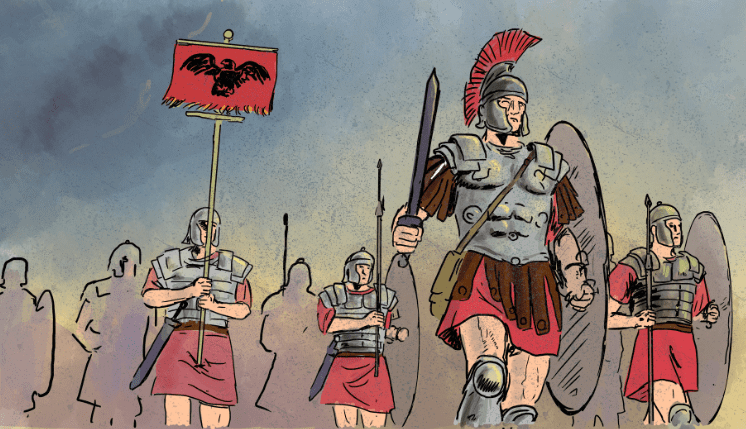
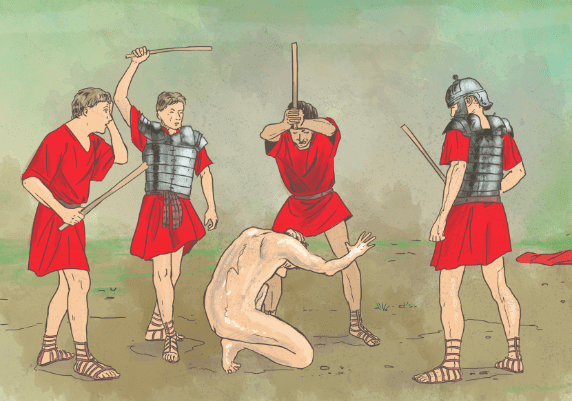
Despite conflicting accounts in ancient sources, it’s generally agreed that Spartacus and his followers were based in southern Italy by early 71 BC. Faced with this escalating rebellion, the Roman Senate appointed Marcus Licinius Crassus to quell the uprising. A veteran of Sulla’s civil war, Crassus commanded a substantial army of approximately 32,000 to 48,000 Roman infantry and auxiliaries. Known for his harsh discipline, Crassus revived the practice of decimation, executing one-tenth of a unit as punishment for cowardice or failure.
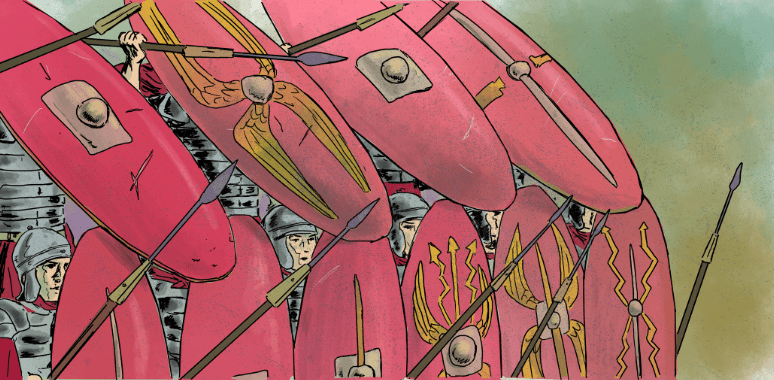
As Spartacus’ forces advanced northward, Crassus deployed six legions along the region’s borders. The initial confrontation occurred near Picenum according to Plutarch, while Appian places it in Samnium. Crassus dispatched two legions under Mummius to outflank Spartacus but forbade them from engaging. Despite these orders, Mummius attacked and was defeated. However, Crassus subsequently engaged Spartacus and achieved a decisive victory, inflicting approximately 6,000 casualties on the rebel army.
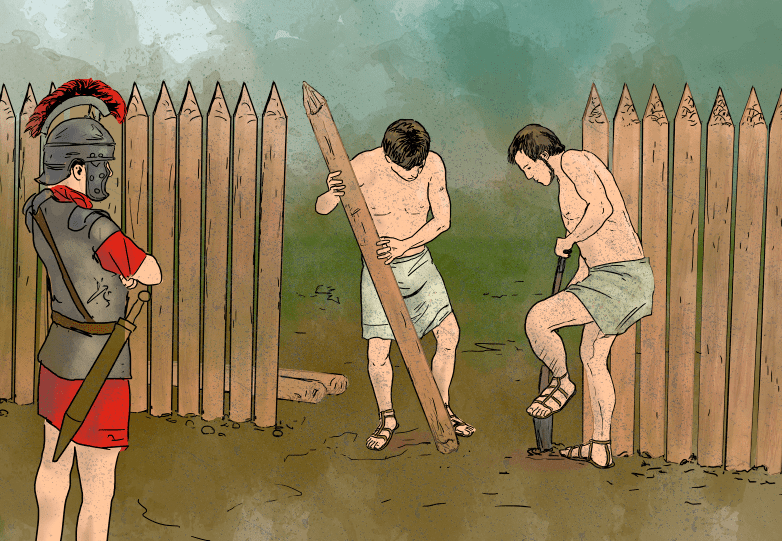
The tide turned in Crassus’ favor, with his legions winning several more battles and forcing Spartacus to retreat south through Lucania to the straits near Messina. According to Plutarch, Spartacus negotiated with Cilician pirates to transport him and 2,000 of his men to Sicily, where he planned to instigate a slave revolt. However, the pirates betrayed him, taking payment and abandoning the rebels. While minor sources mention attempts at raft and shipbuilding by the rebels, Crassus prevented their escape to Sicily. Spartacus’ forces retreated to Rhegium, followed by Crassus’ legions. Crassus fortified the isthmus at Rhegium, effectively besieging the rebels and cutting off their supplies.
To provide the best experiences, we use technologies like cookies to store and/or access device information. Consenting to these technologies will allow us to process data such as browsing behavior or unique IDs on this site. Not consenting or withdrawing consent, may adversely affect certain features and functions.
Functional
Always active
The technical storage or access is strictly necessary for the legitimate purpose of enabling the use of a specific service explicitly requested by the subscriber or user, or for the sole purpose of carrying out the transmission of a communication over an electronic communications network.
Preferences
The technical storage or access is necessary for the legitimate purpose of storing preferences that are not requested by the subscriber or user.
Statistics
The technical storage or access that is used exclusively for statistical purposes.The technical storage or access that is used exclusively for anonymous statistical purposes. Without a subpoena, voluntary compliance on the part of your Internet Service Provider, or additional records from a third party, information stored or retrieved for this purpose alone cannot usually be used to identify you.
Marketing
The technical storage or access is required to create user profiles to send advertising, or to track the user on a website or across several websites for similar marketing purposes.